teardrop shaped rackets: weight, balance and material
78 of the 171 rackets with a spec sheet declare a teardrop shape in their official spec sheet. Here, with the data as each brand publishes it.
78
rackets, from 14 brands
Source: each manufacturer's official spec sheets, accessed on November 2026.
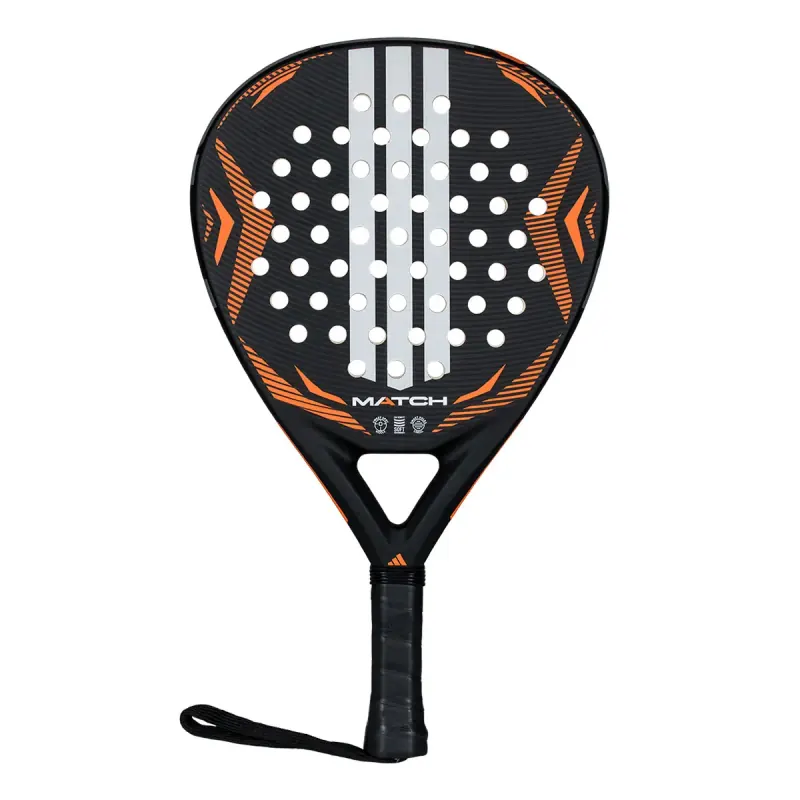
Photo: Adidas 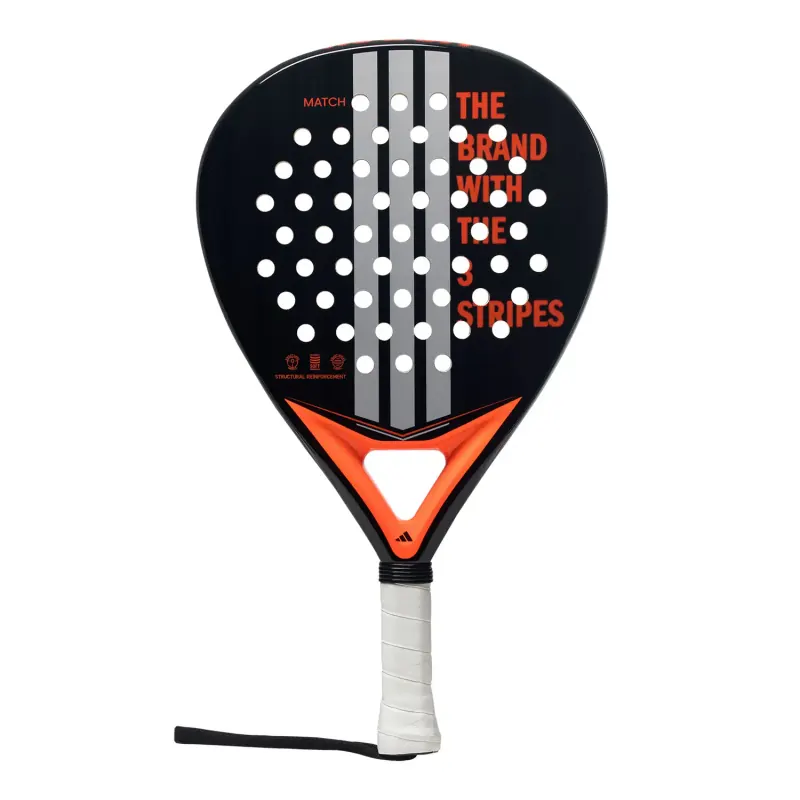
Photo: Adidas 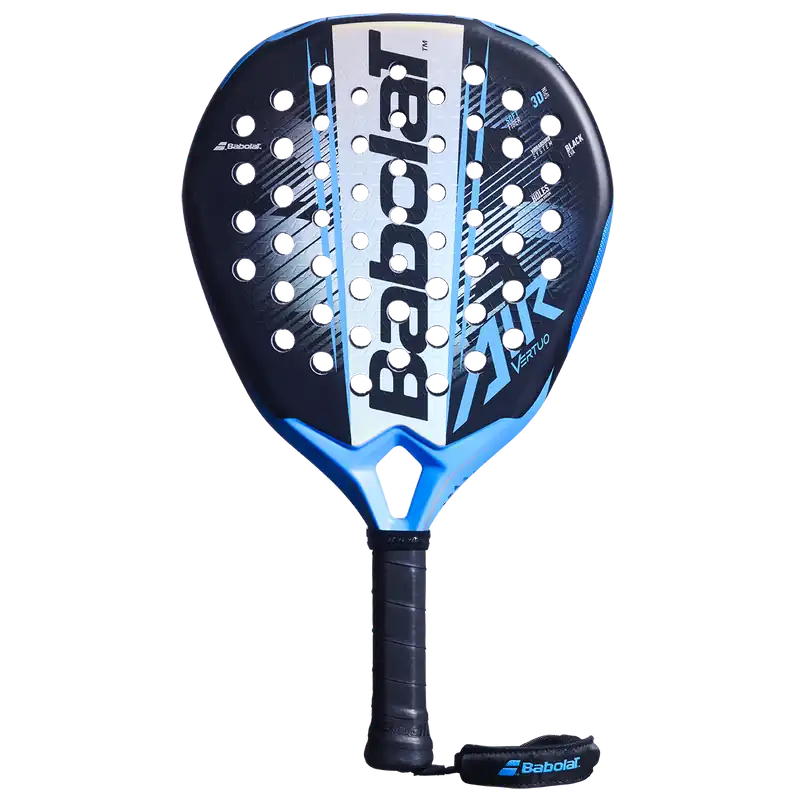
Photo: Babolat 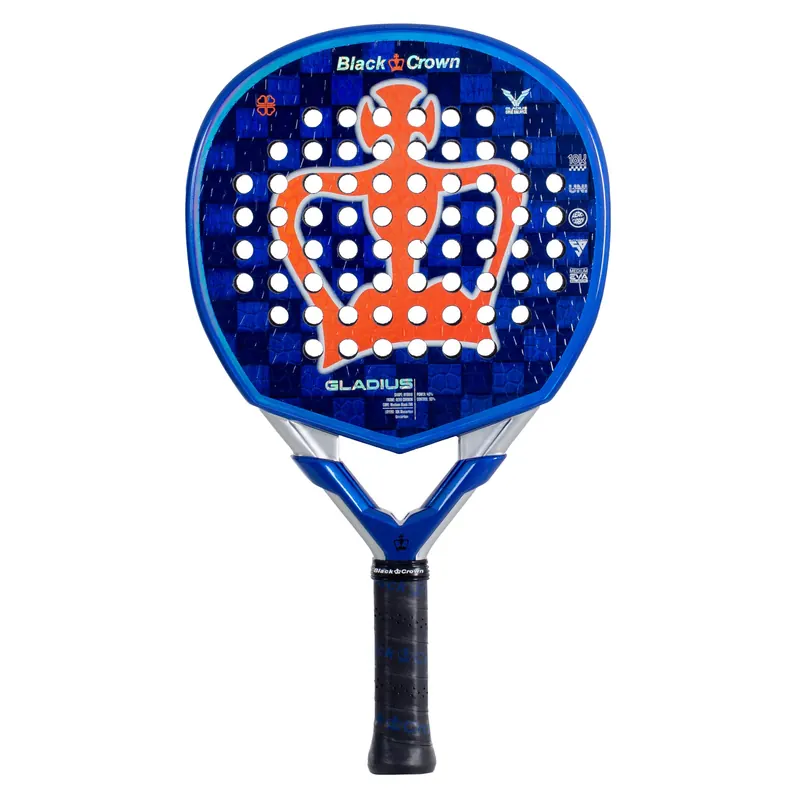
Photo: Black Crown 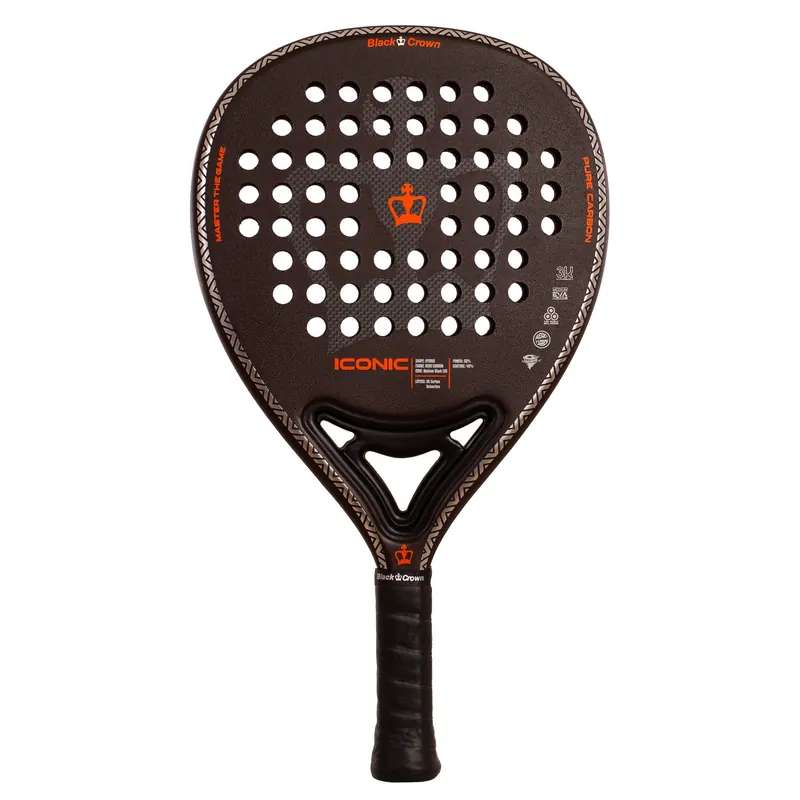
Photo: Black Crown 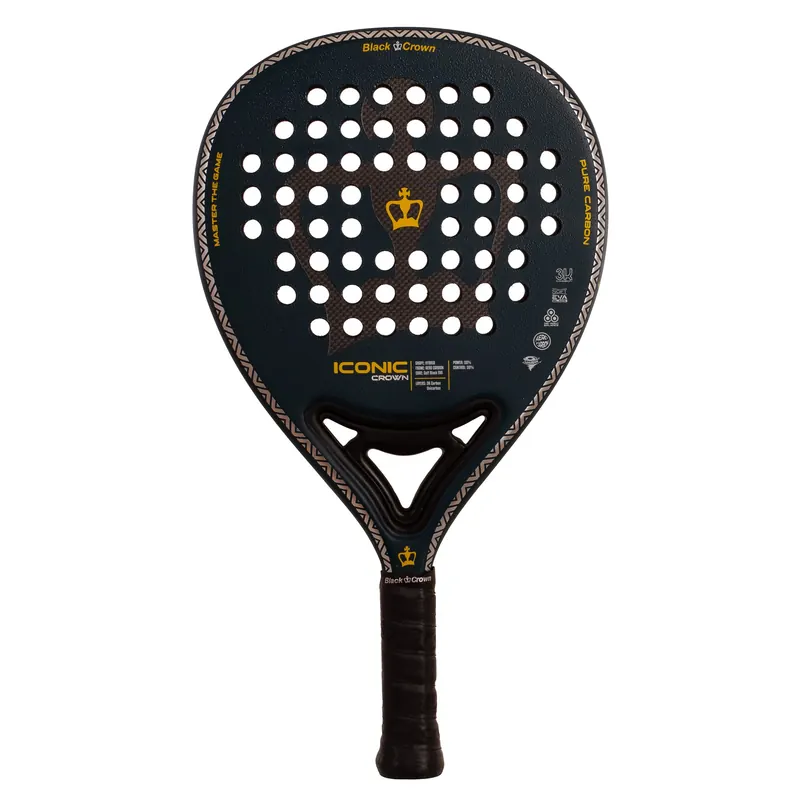
Photo: Black Crown 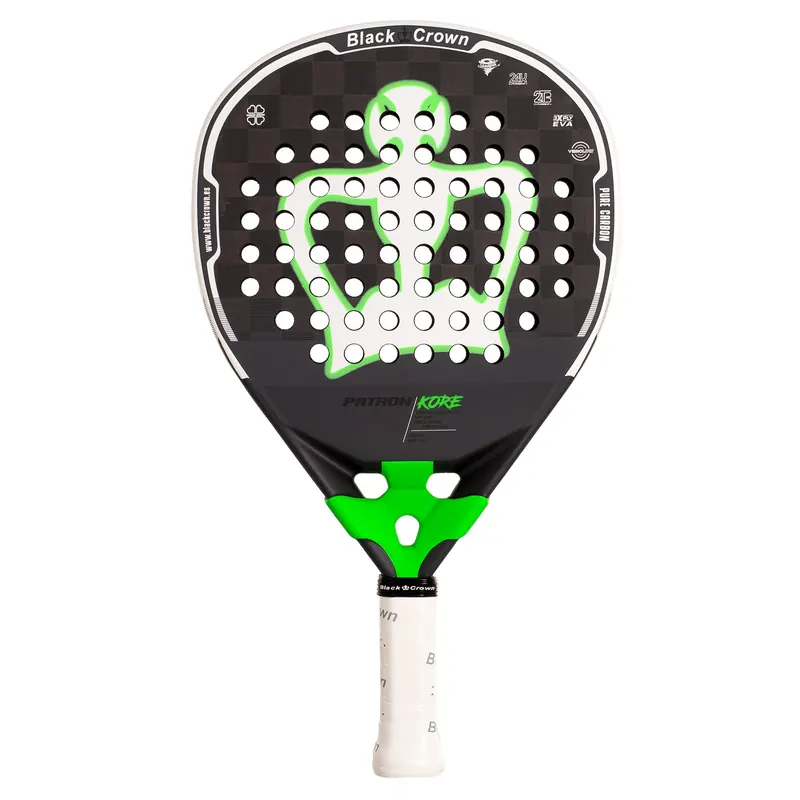
Photo: Black Crown 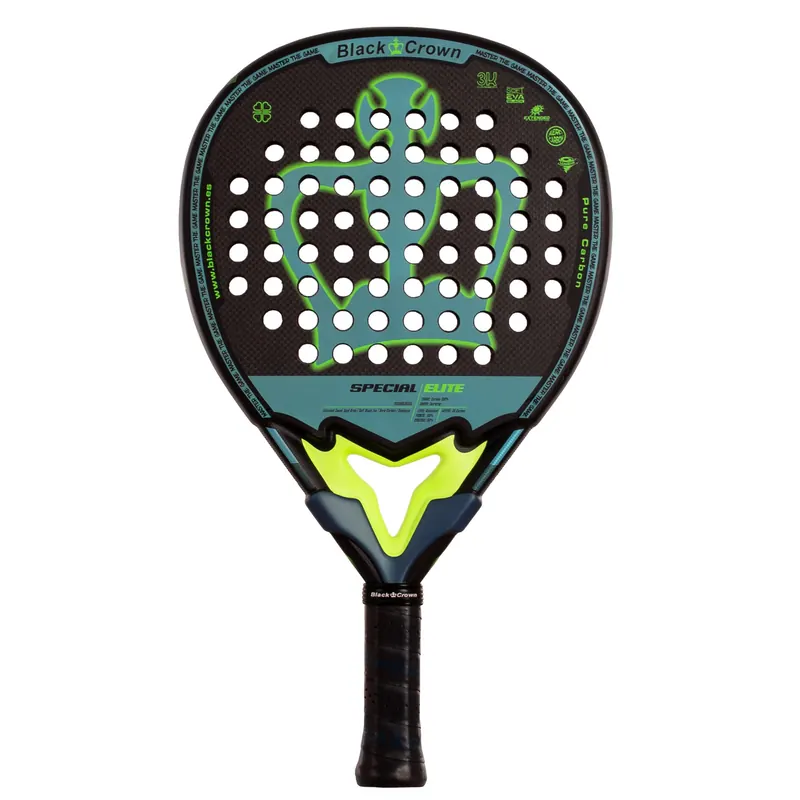
Photo: Black Crown
Show the other 70
- Hack 05 Hybrid 27
365 to 375 g
- NEURON 25
365 to 375 g
- Neuron 02 Edge 27
365 to 375 g
- Neuron 02 Fede Chingotto
365 to 375 g
- Vertex 05 Hybrid 27
365 to 375 g
- AEROX 7.1 3K
355 to 370 g
- MERCURY ATTACK 12K GREY
350 to 365 g
- MERCURY ATTACK 3K BLUE
350 to 365 g
- PHOENIX ATTACK 16K BLUE
350 to 365 g
- PHOENIX ATTACK 3K GREY
350 to 365 g
- POINT LIGHT
355 to 370 g
- RESPONSE 24K SILVER
355 to 370 g
- RESPONSE 3K EVO
355 to 370 g
- RESPONSE PINK IRIDISCENTE
355 to 370 g
- RSX 7.1 CARBON 3K
355 to 370 g
- SCAPE
350 to 365 g
- SPACE BLUE
355 to 370 g
- SPITFIRE ULTRA 12K
350 to 365 g
- Evo Extreme 2025
350 g
- Radical Motion
355 g
- Radical Pro
370 g
- Radical Team
360 g
- Speed One 2025
345 g
- Speed One X 2025
365 g
- Speed PRO 2023
370 g
- Blast Pro Hrd
360 to 370 g
- Slam Pro Iconic
350 to 360 g
- AT10 Luxury Genius 12K Alum Xtreme Lite 2026
355 to 365 g
- AT10 Luxury Genius 18K Alum 2026
360 to 375 g
- EA10 Ventus Hybrid 12K XTREME by Edu Alonso
360 to 375 g
- Genius 12K Alum XTREM Lite by Agustín Tapia 2027
350 to 360 g
- Genius 12K Alum XTREM by Agustín Tapia 2027
360 to 375 g
- Ventus Control 3K by Miguel Lamperti 2027
360 to 375 g
- Ventus Hybrid 12K Lite 2027
350 to 360 g
- Ventus Hybrid 12K XTREM Edu Alonso 2027
360 to 375 g
- EFE Xtreme 2026
350 to 375 g
- Astra Hybrid 2026
355 to 375 g
- Diablo Pro 2026 Royal Blue
355 to 375 g
- Electra Pro 2026 Shadow Red
365 to 375 g
- Electra Pro IT 2026
355 to 375 g
- Electra ST2 Flex 2026
355 to 375 g
- Obsidian Elite 2027
360 to 375 g
- Obsidian Pro 2027 Silver
355 to 375 g
- Pegasus 3
355 to 375 g
- Pegasus Pro 2026 Lava Orange
360 to 375 g
- Astrum+ Black
350 to 370 g
- Black Titan Blue
350 to 370 g
- Drax +
350 to 370 g
- Eternal by Sanyo Gutiérrez
350 to 370 g
- Metheora+
350 to 370 g
- Raptor+ Red
350 to 370 g
- MAXIMA CUBE Elbowcare S
350 to 365 g
- MAXIMA CUBE Elbowcare W
350 to 360 g
- MAXIMA Carbon Rose
340 to 350 g
- Maxima Junior
290 to 310 g
- Maxima Prisma Carbon Soft
345 to 360 g
- Maxima Prisma Orquidea
335 to 350 g
- BLACK MAMBA PRO 2.0
360 to 375 g
- BLACK MAMBA RADICAL ESMERALD
360 to 375 g
- TITAN 3K BLACK
360 to 375 g
- TITAN NERODIA
360 to 375 g
- TITÁN BERUS
360 to 375 g
- YARARA PRO WHITE 2.0
360 to 375 g
- YARARA RADICAL 12K 3.0
360 to 375 g
- YARARA RADICAL GOLD
360 to 375 g
- Bela v3
363 g
- Blade LS v4
355 g
- Blade Pro v3
365 g
- Blade v4
365 g
- Optix v2 Power
360 g
No racket matches these filters.
78 rackets · alphabetical order by brand and model · "No data" when the official spec sheet does not publish it
The teardrop shape in the catalogue
78 of the 171 rackets with a spec sheet declare a teardrop shape, across 14 brands. The other shapes in the same catalogue:
Criteria, questions and sources
Teardrop-shaped padel rackets: spec sheets compared
How to read this page
A teardrop-shaped padel racket is one that the manufacturer prints as teardrop on its spec sheet.
This page lists them with their shape, weight and balance, and each one links to its spec sheet with core, face, the source of each value and the consultation date.
The shape does not change the measurements in the rules, which are the same for all.
The order of the list is alphabetical and does not indicate quality.
The essentials
What a teardrop racket is.
On this page it is a racket whose manufacturer declares that shape on its spec sheet. We have no official source that describes what performance the teardrop shape gives compared with others, so we do not promise effects in play. You can compare the data the brand prints: weight, balance, core and face. A shape alone does not tell you whether the racket fits your game, which is why it is worth looking at the other fields.
How brands name the shape.
Brands do not use a single name: in the data, shapes printed as Teardrop, Drop / Teardrop, Teardrop / Round and Tear Drop, among others, appear. Some spec sheets print two shapes at once, for example teardrop and round. If you are looking for a specific racket and do not see it in the list, check its manufacturer's spec sheet. Spec sheets that print two different shapes, such as “Teardrop / Round”, are not counted as teardrop in the list.
Measurements that any shape meets.
The FIP rules set for the racket a maximum of 45.5 cm total length, 26 cm head width and 38 mm thickness, with a 2.5% tolerance on thickness, and those limits apply to all rackets, whatever their shape. The hitting surface, the same on both faces, can be smooth or rough and is perforated with cylindrical holes. The rules do not say which racket suits each level or playing style.
Maximum dimensions in the FIP rules
- Total length
- 45.5 cm
- Head width
- 26 cm
- Thickness
- 38 mm
Source: Reglas del Pádel (revisión de aplicación 01.01.2026), Federación Internacional de Pádel, accessed on October 13, 2026
If you hesitate between this shape and another, the method is the same: compare the spec sheets. The data on this site records the shape that the manufacturer prints, and we do not reinterpret it. We do not classify one shape as better than another: there is no official data to support it.
How to read the cores.
Each brand names its materials in its own way.
NOX, for example, describes in its glossary the HR2 core as low density rubber with lower weight per square metre, with a softer feel, and the HR3 ones as high density rubber with the greatest memory effect; that is that brand's scale, not a common rule. If a field appears empty, the manufacturer's spec sheet does not print it and we do not fill it in ourselves.
Checklist
- Look at the weight, balance, core and face the manufacturer prints, not only the shape.
- Check how the spec sheet prints the shape, because some brands declare two shapes at once.
- Remember that core and face names belong to each brand and are not equivalent between brands.
- Check the value against the manufacturer's spec sheet that each racket links to and look at the consultation date.
Frequently asked questions
Are a drop racket and a teardrop racket the same?
It depends on how the manufacturer prints it. Some spec sheets have the shape written as “Drop / Teardrop”, and brands do not use a single name. Always look at the shape declared on the brand's spec sheet.
Does the teardrop shape have different measurements?
No, the rules set the same limits for all shapes.
Sources
- Reglas del Pádel (revisión de aplicación 01.01.2026), Federación Internacional de Pádel. Accessed on October 13, 2026.
- Tecnología Premium NOX: glosario de tecnologías de las palas, NOX. Accessed on October 13, 2026.